Mateo Mejia is reframing and remixing filmmaking
Artists, Case Studies | Published on | Last updated on
3 min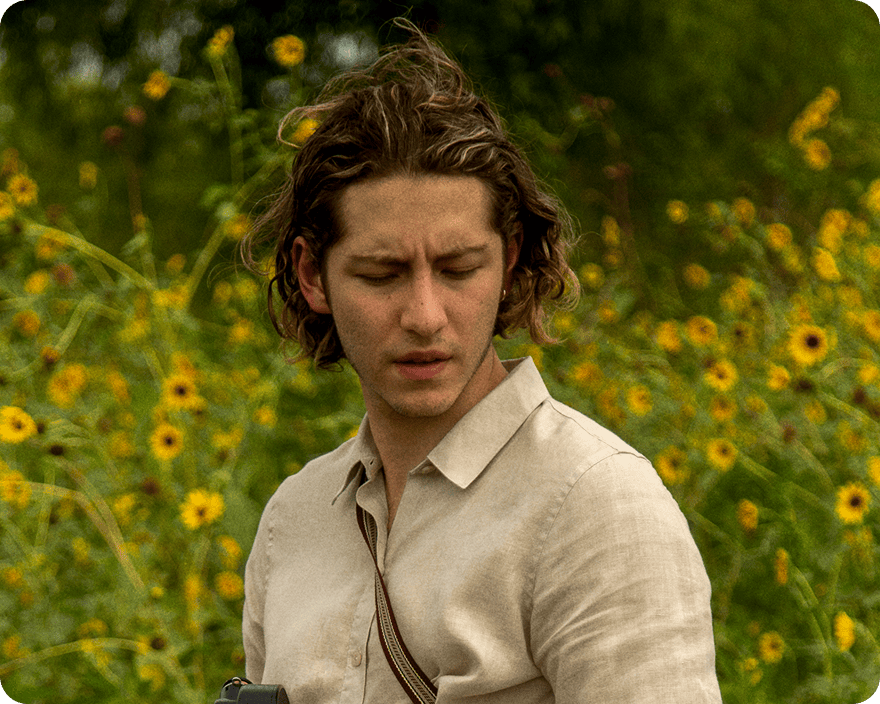
Mateo’s project, Toymaker, is a hybrid short film that combines live-action filmmaking with AI-assisted visual effects
As a filmmaker, Mateo likes to remind everyone that he stands on the shoulders of the giants of cinema who came before him. Talk to Mateo for five minutes and he’ll probably bring up a shot from a Tarkovsky film or a line from a Linklater script. He’s a huge film nerd. And this obsession with the classics inspires and informs the boundary-pushing work he does today.
As a hybrid filmmaker who blends practical footage with AI-generated effects, Mateo views AI as a powerful tool for storytelling. He compares the rise of AI in filmmaking to the way sampling transformed music. For him, it expands creative possibilities while keeping the artist’s voice at the center.
“I really compare this moment to music sampling. It feels like the video sampling era. I get excited about becoming a new kind of mixed-media artist.”
Toymaker was a deeply personal project for Mateo. He spent years developing and refining the script while waiting for the right opportunity to make it.
The short film follows a toy maker who pushes back against a dystopian society built on conformity. Its eerie atmosphere was shaped in large part by Galveston, Texas, whose worn architecture, vacant homes, and quiet coastal streets provided a natural visual language for the film. By shooting on location, Mateo allowed the city itself to help define the unsettling world his characters inhabit.
“It’s not just sitting down and typing in a couple of prompts. When you’re mixing these tools with traditional skills, you realize it’s a completely new way of making things.”
Mateo’s process is rooted in hands-on filmmaking. Every scene was shot with real actors, physical sets, and in-camera effects.
Leonardo’s AI tools were introduced later in the process to extend environments, add surreal details, and reshape spaces while keeping the film grounded in real performances.
As much as Mateo’s style can feel freewheeling and loose, he’s a meticulous director. Scenes were carefully mapped out in advance so that AI-assisted effects would marry well with the live-action footage. Camera choices, lighting, and movement were all considered early to ensure consistency between the physical and digital worlds of the film
“I see a future where the artists who impress us are the ones who can film, act, direct, and score their own projects—almost like electronic musicians building everything themselves.”
With the scale of the production came a new level of intensity. Bigger crews and packed schedules forced Mateo to think quickly and adapt in real time. Balancing creative ambition with the reality of limited time, budget, and—of course—daylight.
Beyond logistics, managing the on set atmosphere mattered just as much. Keeping morale high and collaboration strong helped the team push through stressful moments
“I get excited that I can see the value in this before a lot of people do—but I still want to honor where filmmaking came from.”
At its core, Toymaker shows how Mateo views filmmaking as an evolving medium. By grounding the story with performances by real actors in the real world, the film embraces imperfection and experiments with ways AI can act as creative support, rather than serve as a creative substitute.
Drawing from the giants of cinema who shaped his taste and approach, Mateo uses new technologies to explore where filmmaking can go next. For him, filmmaking is deliberately hands-on. He works across writing, directing, shooting, and editing himself, grounding each project in the tactile traditions he admires while using new tools to push the form forward.
“I tried to put the fund into the world-building—the costumes, the props, the performers, and the location. That’s the base you build everything off of.”
Support from the Leonardo Imagination Fund gave Mateo the freedom to fully commit to the film’s vision. What emerged was an unlocking of voice—one shaped by the filmmakers he reveres and sharpened through collaboration.
Watch: Toymaker
. . . .
RelatedArticles
Joyce Ng shows us the commuter through the eyes of machines
For Human Error Rate, Joyce took videos of commuters from around the world and prompted an AI model to mirror their behavior Under the name alsoguppyme, Joyce creates work that transforms the ordinary into the surreal. As an AI artist, she doesn’t want to use technology to escape reality or smooth it over. The way […]
Ivona Tau reconstructs her family history using AI tools
For her Imagination Fund project, Ivona used her grandfather’s archival 8mm footage to reconstruct her family’s past using AI tools. Ivona Tau is a new media artist from Vilnius whose work examines memory, nature, and perception. With AI as a tool in her practice, she uses code and machine learning to revisit the architecture of […]
Lucas Clément is building his dream world
For his Imagination Fund project, Lucas expanded Anotherworld into a cinematic short film with a 360° VR experience built from the project’s core imagery. Based just outside of Paris, Lucas is the creator of AnotherWorld. In this surreal world on social media, he invites his audience to explore dreams and all emotions they evoke. To […]