Ivona Tau reconstructs her family history using AI tools
Artists, Case Studies | Published on | Last updated on
3 min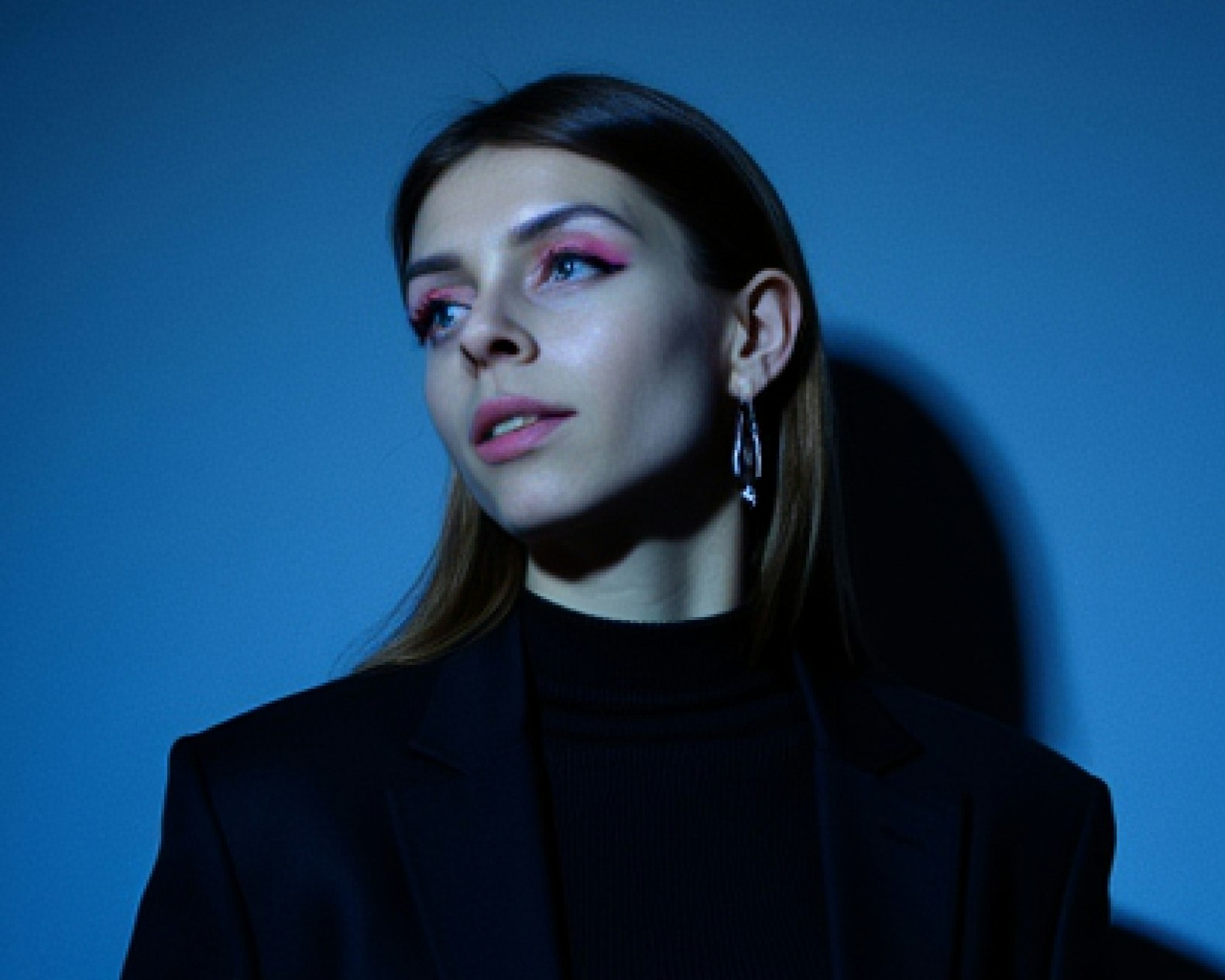
Meet the artist
For her Imagination Fund project, Ivona used her grandfather’s archival 8mm footage to reconstruct her family’s past using AI tools.
Ivona Tau is a new media artist from Vilnius whose work examines memory, nature, and perception. With AI as a tool in her practice, she uses code and machine learning to revisit the architecture of her own memories
“I like to think of training AI models on visual data as a way of extracting the ‘essence’ of that data. Very often, this essence differs from what we would consider essential.”
As an artist with a background in photography, Ivona treats AI as a new medium for portraiture. Through her studio practice, she explores how the past can be reshaped to offer new meaning for the present.
The spark for Ivona’s project, I Wish I Had Told You About the Fieldfares This October, arrived in the flicker of a 1960s projector. After rediscovering her grandfather’s old 8mm footage, she spent days watching family films from 1960s–80s Soviet-occupied Lithuania.
Seeing the frames sped up felt like the first time she’d held a flipbook. Only this time, it was her family’s memories. To Ivona, this was pure magic. Watching the footage, Ivona realized that her grandparents were younger in these clips than she is today. And this made her wonder what it would be like to bend time and connect with them today.
“I wish I could talk to them, show them my life today, and let them see how I turned out. I imagine they would react with laughter and probably complete incomprehension.”
Inside the creative process
Ivona’s workflow began with the raw data of history: photographs and videos from the family archive. To bring these memories into the digital age, she trained several AI models in Leonardo with curated subsets of this data.
Using the data, she was able to merge her own identity with those of her ancestors and create A character LoRA, an avatar she based off herself using AI models trained on her family members. And with A character LoRA dropped into the scenes from her grandfather’s footage, Ivona was able to start a dialogue between generations.
“What surprises me is how much learning about the world through visual imagery happens non-verbally.”
Ivona prefers to shape a model that is already close to what she wants to express and then interact with it using simple phrases like “a woman sitting in her apartment.” This allows the image to speak for itself, surfacing eerily familiar details, like the specific pattern of a curtain or the drape of a scarf, that she didn’t explicitly ask for.
The project reached its turning point when Ivona began writing the script and dialogue for her speculative family members. Then something turned for her. It started to feel less like she was replicating the past and more like she was building this romanticized alternative.
In the original footage, the smiling faces from her family members often masks the historical context of everyday life in the Soviet Bloc. Ivona wanted to change that narrative
“I wanted them to relive those years with the knowledge that they would ultimately live in freedom, while also acknowledging that freedom, like many other virtues, can be fleeting.”
The work turned echoes from the past into an emotional experience you could feel today. A powerful experience that challenges how we view AI-assisted art.
Pushing their craft forward
The Leonardo Imagination Fund provided Ivona with the two things most archival projects lack: time and specialized tools. The support allowed her to properly digitize vast archives and experiment freely without the pressure of immediate results
“The fund allowed me to create a longer-form piece, something I had always wanted to do but never had the time to properly develop,” she explains. This freedom enabled her to move beyond single images into a cohesive, multi-channel storytelling experience.”
Watch: I Wish I Have Told You About the Fieldfares this October
. . . .
RelatedArticles
Joyce Ng shows us the commuter through the eyes of machines
For Human Error Rate, Joyce took videos of commuters from around the world and prompted an AI model to mirror their behavior Under the name alsoguppyme, Joyce creates work that transforms the ordinary into the surreal. As an AI artist, she doesn’t want to use technology to escape reality or smooth it over. The way […]
Lucas Clément is building his dream world
For his Imagination Fund project, Lucas expanded Anotherworld into a cinematic short film with a 360° VR experience built from the project’s core imagery. Based just outside of Paris, Lucas is the creator of AnotherWorld. In this surreal world on social media, he invites his audience to explore dreams and all emotions they evoke. To […]
2026’S POWER LIST: TOP 50 WOMEN AI FILMMAKERS
Mia Forrest uses technology to reflect nature’s algorithms
For Orchids, Mia uploaded images from the National Herbarium of New South Wales into an AI model to generate new species of AI-grown orchids Mia Forrest is an Australian multidisciplinary artist with work presented by Sotheby’s and Unit London. She works from her studio in Byron Bay near the rainforest and likes to stay close […]